
What Are the Different Types of Bus Seats? A Complete Buying Guide

 Aug 5, 2026 | 14 min read
Aug 5, 2026 | 14 min read
Aug 5, 2026 | 14 min read
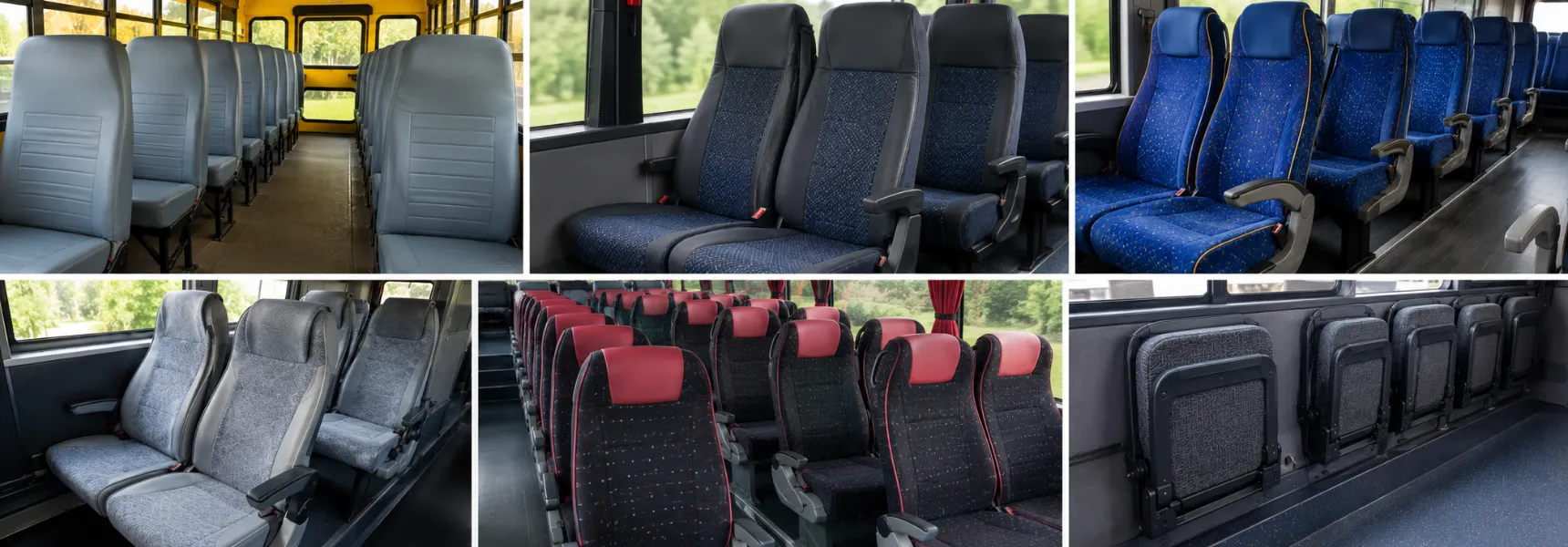
Choosing the right types of bus seats depends on your fleet’s purpose, passenger comfort requirements, route length, and vehicle layout. School buses, staff transport, intercity coaches, luxury coaches, and customised buses all require different seating configurations to balance comfort, durability, capacity, and maintenance.
Whether you’re managing a school fleet or upgrading executive coaches, selecting the right seat involves more than appearance. Factors such as reclining features, seat dimensions, materials, safety, and long-term maintenance all affect passenger experience and operational efficiency. In this guide, we’ll explain the most common types of bus seats, compare their features, and help you choose the best seating solution for your fleet.
Here is a quick comparison between different types of bus seats to help you choose the right one for your fleet:
| Seat Type | Best Suited For | Main Advantage |
|---|---|---|
| School bus seat | Student transport | Stable, practical layout |
| Non-reclining highback | Staff and short-route buses | Simpler maintenance |
| Reclining 2×2 | Intercity and tourist coaches | Comfort with useful capacity |
| Wide 2×1 | Executive and premium coaches | More personal space |
| High-capacity 3×2 | Capacity-led routes | More passengers per trip |
| Folding seat | Compact or flexible areas | Frees space when folded |
| Sofa seat | Custom and hospitality coaches | Lounge-style experience |
The right seat will assist a bus in carrying passengers with comfort, maximising the use of cabin space and lowering maintenance costs over time. Passengers are able to tell when seating arrangements are not good. Research into bus-interior preferences found cramped seats among the recurring negative impressions of bus travel, showing why spacing and cushion dimensions influence the wider perception of a fleet.
Such a seat arrangement may result in the narrowing of the aisle, difficulty in maneuvering, uneven spaces, and an increase in repair activities. The right seat arrangement assists the bus to operate smoothly, from its installation through operation.
A school bus requires a format that is stable to accommodate regular boarding and cleaning, as well as organised movement within the cabin.
This school bus seat should possess the following attributes: fixed backrests, built-in grab handles, storage trays for luggage, functional armrests, and appropriate restraints.

A non-reclining highback seat provides support to the upper body without requiring a mechanical system to move. It is ideal for staff buses, traveler buses, and short-distance intercity buses.
With the fixed back, there is no risk of misalignment of rows. Fewer moving mechanical components translate to lower maintenance costs. SF Seats provides a compact version that has a 17-inch cushion and fixed configuration for traveler buses and compact coaches.
A 2×2 reclining configuration is a good compromise in terms of intercity bus seats. The passenger enjoys the flexibility of having an adjustable backrest without compromising on capacity.
Look out for cushion size, seat pitch, movement of the recliner, armrest configuration, and clearance of footrests. If the reclining seat has a lot of recline angle compared to the existing row pitch, then it will be difficult for the passenger at the rear end. Use it for long haul routes.
In a 2×1 configuration, there will be two seats on one side while one seat is on the other side. This type of seating configuration is appropriate for executive services and valuable intercity routes.
Properly designed luxury bus seats have a wider cushion, wider armrest, push-back recline, and footrest. However, this seating configuration can be used if the price structure allows it.
A 3×2 seating configuration can provide high passenger capacity but needs proper vehicle width.
The additional width of the row affects the aisle clearance, passenger entrance and exit. Bus seat manufacturers need to assess doors, wheel cutouts, emergency exits, and mountings before the order is confirmed. This seating configuration is advisable if the capacity is commercially important in the vehicle.

The folding seats are suitable in places where permanent space for a seat is not possible. These could be located near entry, crew, or specialised zones.
Check out the hinge, bracket mounting, and clearance during the open and folded position of the seat. It must fold up nicely without getting in the way.
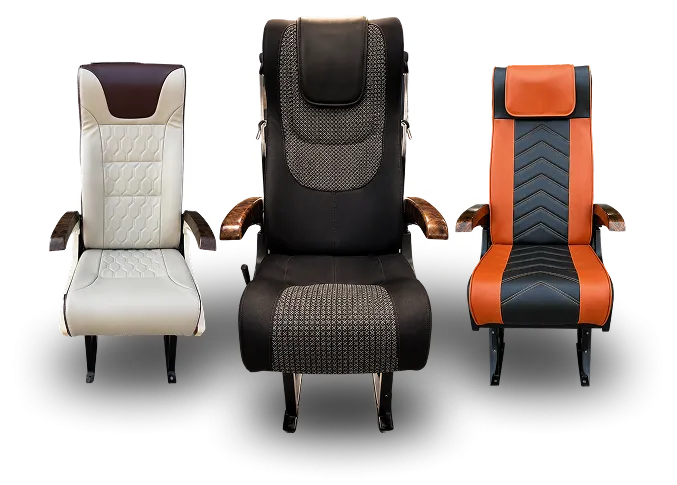
The sofa seats make a lounge-like zone instead of a traditional row. These may feature extended headrests, quilted panels, wooden-finish armrests, and cup holders.
This makes it perfect for customised coaches and hospitality transports. If you want a premium sofa seat experience in your fleet, check out the SF Seats sofa seats featuring a center console with cup holders, heavy cushioning, and an MS frame.
Use this framework before asking for prices.
| Decision Area | Question to Ask | Why It Matters |
|---|---|---|
| Route | How long is each journey? | Longer trips need more support |
| Passenger | Who will use the bus? | Students, staff, and tourists differ |
| Layout | What fits the floor plan? | Width affects aisles and capacity |
| Maintenance | Which parts can be replaced? | Easier repairs reduce downtime |
| Repeat supply | Can the design be reproduced? | Future additions should match |
| Fitment | Are mounting details available? | Early review prevents changes |
A dependable seat manufacturing company should discuss these points before recommending finishes or accessories.
Even if two types of bus seats seem identical, they can behave differently throughout their life cycle. This depends on the composition of foam used, structure of the frame, surface coating, and upholstery.
An interesting supplier review always includes more aspects than just looks. You may want to see comments about fitment, finish quality, spare parts availability, and repeat orders.
While communicating with bus seat manufacturers, you should ask:
The main types of bus seats include school bus seats, non-reclining highback seats, reclining 2×2 seats, 2×1 seating, high-capacity 3×2 seats, folding seats, and sofa seats. Each is designed for specific passenger and operational needs.
Reclining 2×2 seats are the preferred choice for long-distance travel because they offer better comfort, adjustable backrests, armrests, and more legroom than standard seats.
A 2×2 layout has two seats on each side of the aisle for higher passenger capacity. A 2×1 layout has two seats on one side and one on the other, providing more aisle space and greater passenger comfort.
School bus seats are designed with high backs, impact-absorbing padding, and durable materials. They prioritize student safety, easy maintenance, and compliance with school transportation standards.
Choose bus seats based on your vehicle type, passenger capacity, route length, comfort requirements, safety features, durability, and maintenance needs.