
What Is Bus Seat Pitch? How to Calculate the Right Seat Spacing

 Sep 19, 2026 | 21 min read
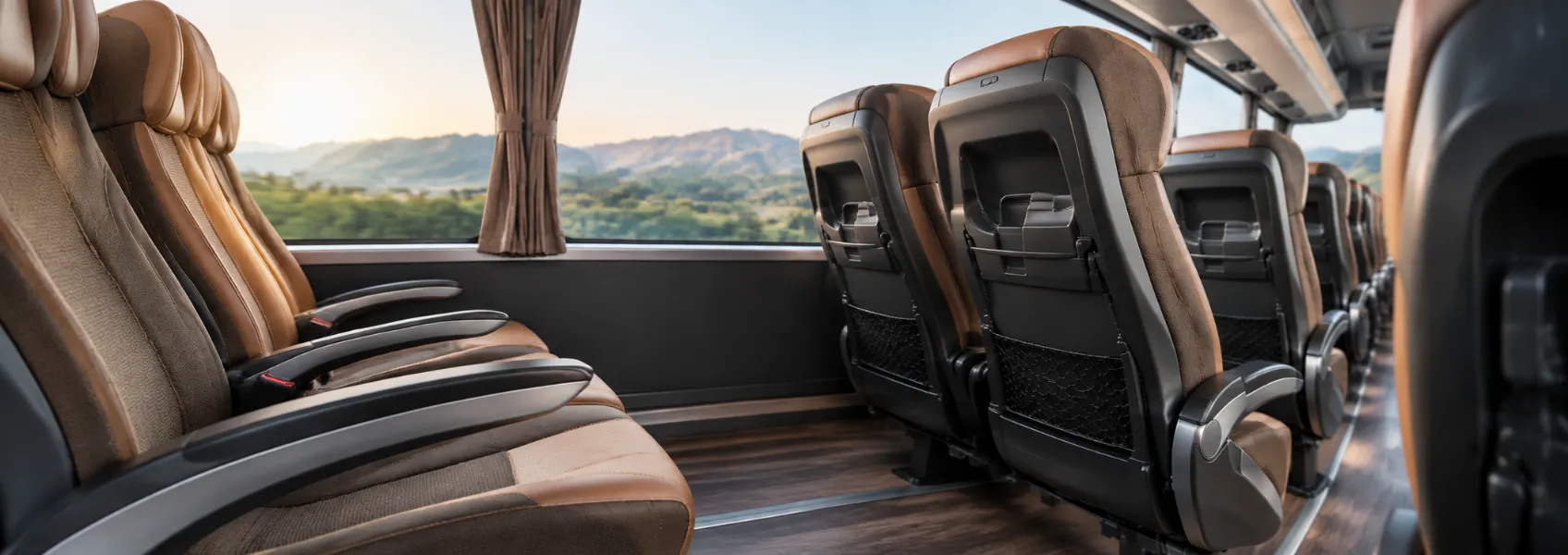
Bus seat pitch is the front-to-back distance between the same reference points on two consecutive rows of bus seats. It is an important measurement in bus interior planning because it influences passenger legroom, personal space, seating capacity, recline clearance, and overall seat layout.
Unlike seat width, which measures the side-to-side seating space, seat pitch measures the distance from one seat row to the next. A greater pitch generally provides more space for passengers, while a smaller pitch can help accommodate more seats within the available cabin length.
There is no single bus seat pitch that works for every vehicle. City buses, school buses, staff buses, intercity coaches, and luxury coaches can require different spacing depending on their purpose, journey length, seat design, passenger capacity, and available cabin space. Choosing the appropriate pitch is therefore important when designing comfortable bus seats without unnecessarily reducing seating capacity.
In simple terms, bus seat pitch is the distance from a defined reference point on one seat to the same reference point on the next row.
The exact reference point can vary depending on the measurement standard or manufacturer. Some bus specifications describe seat spacing as the distance between the back of one seat and the back of the seat in front, while other specifications may measure between seat bases. For example, a highway-bus specification from WILLER defines seat spacing from the back of the front seat to the back of the passenger’s seat, while also noting that pitch can be measured between seat bases depending on the seat structure.
This is why seat pitch should always be compared using the same measurement method.
These two measurements are often confused:
| Measurement | What it describes |
|---|---|
| Seat pitch | Front-to-back distance between rows |
| Seat width | Side-to-side seating space |
| Seat depth | Front-to-back depth of the seat cushion |
| Legroom | Usable space available for the passenger’s legs |
Seat pitch and actual legroom are related, but they are not exactly the same thing. Seatback thickness, seat shape, reclining mechanism and other components can affect the space a passenger actually experiences.
Seat pitch affects both passenger comfort and the number of seats that can be installed.
Increasing the distance between rows can create more room around the passenger’s knees and legs. This can become particularly important on intercity and long-distance routes where passengers remain seated for extended periods.
Research on bus-seat ergonomics has also examined seat dimensions and spacing as part of passenger comfort and vehicle packaging.

A reclining bus seat needs enough space for the backrest to move without unnecessarily restricting the passenger behind it.
For this reason, seat pitch should be considered together with recline angle, seatback thickness and footrest movement rather than as an isolated number.
SF Seats currently offers fixed, pushback and full-recline configurations, with different recline systems intended for different vehicle applications.
Seat pitch also affects how many rows can fit into the usable cabin length.
If the available seating area is fixed, increasing row spacing generally means fewer rows can be accommodated. Reducing the spacing can create room for additional rows, provided the complete layout remains suitable for the vehicle.
Seat pitch must work with other dimensions, including:
This means the right seat pitch is a vehicle-layout decision, not simply a comfort number.
he basic calculation is:
For example:
In this example, the seat pitch is 850 mm.
A bus-seat ergonomics study used an 850 mm pitch when evaluating bus seats in a controlled seating mock-up, illustrating that pitch values are selected as part of a specific seating design rather than being universal across all buses.
If the usable length available for 10 equal seat intervals is 8,500 mm:
So the theoretical row spacing would be 850 mm.
In an actual bus, however, this calculation is only a starting point. Wheel arches, doors, emergency exits, driver-area restrictions and other components can change the usable space.

There is no single standard bus seat pitch that applies to every vehicle. The appropriate spacing depends on the bus type, seat design, passenger capacity, journey length, and available cabin space.
Published specifications show that bus seat pitch can vary considerably. For example, WILLER lists seat-spacing figures ranging from approximately 91 cm to 158 cm across different highway-bus configurations. This variation demonstrates how seating requirements can change depending on the vehicle and seat configuration.
Another published bus-design reference identifies 720 mm as a commonly used minimum seat-pitch dimension in a specific UK bus context, while larger spacing may be used when greater personal space is required. This figure should not be considered a universal requirement for every bus, region, or seating application.
For this reason, instead of asking “What is the standard bus seat pitch?”, it is more useful to ask:
“What seat spacing is appropriate for this vehicle, seat model, and passenger requirement?”
The answer may be different for a city bus, school bus, staff bus, intercity coach, or luxury coach. When designing Customised Bus Seats, factors such as seat dimensions, recline angle, footrests, cabin layout, passenger capacity, and desired legroom should be considered when determining the appropriate bus seat pitch.
Several factors should be evaluated before finalising row spacing.
| Bus Seat Pitch Factor | What It Means |
|---|---|
| Bus Type | A city bus designed for frequent stops may have different priorities from an intercity coach designed for longer journeys. |
| Journey Length | Longer journeys generally place greater importance on personal space, posture support and recline clearance. |
| Seat Type | Fixed, semi-reclining and full-reclining seats require different amounts of space. |
| Passenger Capacity | A compact layout may be considered when maximising seating capacity is important, while greater spacing may be appropriate when passenger space is a higher priority. |
| Footrests and Accessories | Footrests, magazine holders, bottle holders and other accessories can occupy or influence the space around a seat. |
| Cabin Dimensions | Available cabin length and width ultimately determine what can physically fit inside the vehicle. |
Seat pitch is independent of the seating arrangement itself, but the 2×2, 2×1 or 3×2 configuration changes how the available cabin space is distributed.
A 2×2 configuration places two seats on each side of the aisle.
It is commonly used where operators want to balance passenger capacity with comfort. SF Seats’ 2×2 reclining models are designed for intercity coach applications and include features such as pushback recline and movable footrests.
When selecting pitch for a 2×2 layout, check:

A 2×1 bus seating layout places two seats on one side of the aisle and one seat on the other. This configuration can provide passengers with more personal space and is often considered for premium, luxury, and long-distance coach interiors.
For example, Maharaja bus seats from SF Seats are available in a 2×1 pushback configuration, with a 20.5-inch seating surface and optional foot-support configurations.
Because a 2×1 layout changes the amount of space allocated to each passenger, bus seat pitch should be considered alongside seat width, recline clearance, foot support, and aisle positioning when planning the overall seating arrangement.
A 3×2 layout can increase passenger capacity but requires careful cabin planning.
The additional seat position affects:
For high-capacity applications, the complete floor plan should be reviewed before selecting the final seat spacing.

Seat pitch is a measurement between seat rows; legroom is the usable space a passenger actually has for their legs.
They are connected, but they should not be treated as identical.
For example, two buses could have the same nominal pitch but feel different because their seats have different backrest thicknesses, cushion profiles or recline mechanisms.
This is particularly important when comparing reclining seats.
In short:
Seat pitch tells you how far apart the rows are. Legroom tells you how much usable space the passenger experiences.
Start with the purpose of the bus, rather than selecting a pitch number first.
For a school or staff bus, efficient space utilisation and practical maintenance may be important. For an intercity coach, passenger comfort and recline movement may receive greater attention. A premium coach may allocate additional cabin space to fewer passengers.
Before finalising the seating plan, review:
SF Seats’ current customisation options include seat layouts, upholstery, recline mechanisms, armrests, footrests, seatbelts and other accessories, allowing the seating specification to be considered around the vehicle requirements.
Before ordering seats, ask the manufacturer for the technical information needed to plan the complete layout.
Useful questions include:
This information can help prevent fitment problems after the seats are manufactured.
Seat pitch should not be considered separately from the type of bus seat.
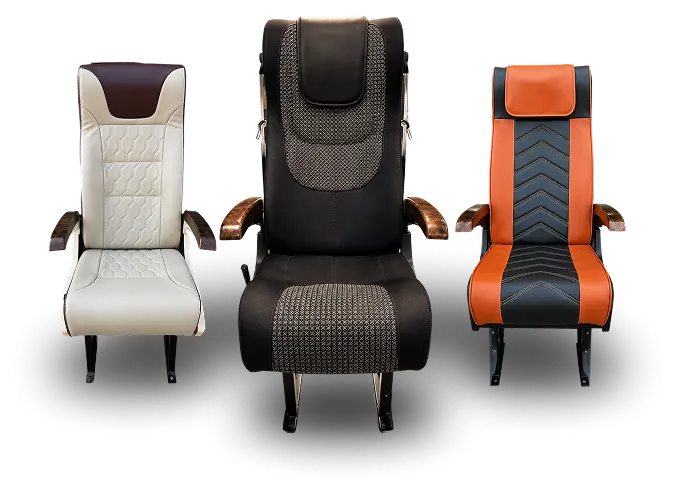
SF Seats provides different seating formats, including reclining 2×2 seats, 2×1 Maharaja seats, non-reclining highback seats, folding seats and school bus seats. Comparing these options can help operators understand how different seat designs affect the overall interior plan.
You can explore the guide to different types of bus seats to compare seating formats before finalising your layout.
When selecting a seat, consider its dimensions, configuration, recline movement, mounting requirements and available cabin space together with the desired seat pitch.
Bus seat pitch is the front-to-back spacing between consecutive seat rows, and it plays an important role in balancing passenger space, seating capacity and interior design.
There is no single correct bus seat pitch for every vehicle. The appropriate spacing depends on the bus type, available cabin dimensions, seat design, passenger capacity, recline mechanism, footrests and other interior requirements.
As an experienced Bus Seat Manufacturing Company, SF Seats understands that bus seating needs to be planned around the vehicle rather than based on one standard measurement. Reviewing the seat dimensions, cabin layout, mounting points and recline requirements before production can help create a more practical seating arrangement.
Bus seat pitch is the front-to-back distance between corresponding points on two consecutive seat rows. It indicates how much space is available between rows.
There is no single standard for every bus. Published specifications vary by bus type and seating configuration, with examples ranging from approximately 680 mm to 900 mm or more.
Bus seat pitch is measured by taking the distance between the same reference point on two consecutive seats or rows. The exact reference point depends on the measurement specification being used.
Yes. A greater seat pitch generally provides more space between rows, which can increase available legroom. However, actual legroom also depends on seatback thickness, seat design and other components.
There is no universal best pitch for long-distance buses. Coaches designed for longer journeys often use greater spacing to provide additional passenger space, but the appropriate pitch depends on the seat design, cabin dimensions and required seating capacity.
