

City Bus
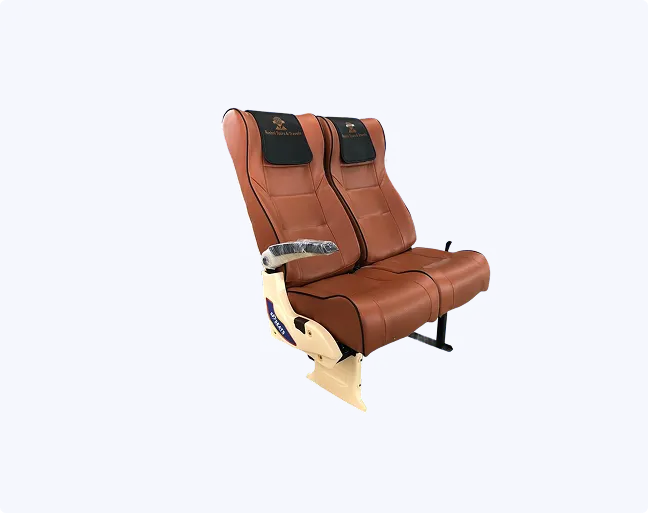
Developed for tighter coach interiors, this 2×2 format supports efficient cabin planning while maintaining passenger comfort, making it well-suited to active intercity operations.

17 Inch

50 mm & 40 mm

PU Foam

Designed for tighter 2×2 coach layouts, the 36” format supports efficient seat pitch management without disrupting cabin balance. Its compact profile allows operators to optimise interior planning while maintaining a defined seating structure. The availability of single or three-armrest variants offers flexibility in aisle and middle seat configuration, supporting varied layout strategies across fleet builds.


 Ergonomic Headrest
Developed with defined proportions and controlled materials, this configuration supports consistent installation across repeat coach production cycles.
Start with your project details, and we’ll help narrow the seating direction with greater clarity around layout, timing, and fitment.


Configure this model to align with layout preference and operational requirements.

Seat Belts

Footrest System

Bottle Holder

Magazine Holder
Stay informed on the ideas, trends, and practices behind modern bus seating.
The 36” format is typically selected when cabin space is tighter or when seat pitch optimisation is a priority. Its more compact dimension allows better interior alignment across rows, helping builders maintain structured aisle planning without sacrificing seating clarity.
The 17-inch seating profile supports efficient space utilisation in 2×2 configurations. It allows operators to maintain organised seating alignment while managing overall cabin capacity, making it practical for fleets that prioritise structured layout over wider seating formats.
The single-armrest variant is typically used where aisle space or outer-seat alignment is a priority. The three-armrest configuration provides defined separation between passengers, improving seat identity in shared layouts and offering additional structural symmetry within the cabin.
A fixed plastic-padded footrest provides stable support without introducing additional moving components. This can simplify long-term upkeep while maintaining passenger positioning support, particularly in routes where consistent seating structure is preferred over adjustable formats.
With defined dimensions, controlled foam density, and consistent material composition, the 36” configuration supports repeat production accuracy. This helps operators maintain visual and structural uniformity across multiple vehicles when implementing phased procurement or fleet-wide upgrades.
