
Customised Bus Seats: Design, Features & Options for Different Buses

 Sep 13, 2026 | 18 min read
Sep 13, 2026 | 18 min read
Sep 13, 2026 | 18 min read

A bus seat is not something you can choose only by looking at its appearance. The number of passengers, available space, journey length and type of bus all matter.
That is why many operators and bus builders look for custom bus seats instead of using one standard design for every vehicle.
SF Seats manufactures bus seating for different applications, including school buses, staff buses, tourist coaches and luxury vehicles. Depending on the requirement, the seat can be selected with different layouts, cushioning, upholstery and comfort features.
In simple terms, customised bus seats are seats selected or designed around the requirements of a particular vehicle.
The customisation could be something as basic as changing the upholstery or seat width. In other cases, it may involve the complete seating arrangement, including the layout, reclining mechanism, armrests, footrests and other accessories.
For a bus operator, this matters because the same seat will not necessarily work well in every type of vehicle.
A school bus, for example, is used differently from a luxury coach. The seating needs are different too.
There are several areas that can be considered when choosing a custom bus seat.
The seating arrangement has a direct effect on passenger capacity and personal space.
Depending on the bus, layouts such as 2×2, 2×1 or 3×2 can be considered. A 2×2 layout is common where capacity and comfort both matter. A 2×1 arrangement gives passengers more room and can work well for premium or luxury coaches.
Seat width should be considered along with the available cabin space. Making a seat wider sounds simple, but it can affect the number of seats that fit inside the bus.
Cushioning is another important point. Seats used for longer journeys generally need good support rather than simply a very soft cushion.
If passenger comfort is your main concern, you can also read our guide to comfortable bus seats.

The upholstery affects both the appearance and everyday maintenance of the seat.
Depending on the application, buyers can consider different colours, fabrics, rexine and finishing options. For buses that see heavy daily use, easy cleaning and durability may be more important than appearance alone.
For long-distance travel, reclining seats can make a noticeable difference.
Depending on the seat design, other features can include armrests, footrests, bottle holders, magazine pockets and seat belts. The important thing is to choose features that passengers will actually use rather than adding unnecessary extras.
So, is a custom seat always better than a standard one?
Not necessarily.
A standard bus seat can be perfectly suitable when the vehicle has a conventional layout and there are no unusual requirements. It is generally a straightforward option.
Custom bus seats make more sense when the seating needs to be adjusted around a particular vehicle or application.
| Custom Bus Seats | Standard Bus Seats |
|---|---|
| More flexibility | Fixed specifications |
| Layout can be planned around requirements | Limited layout options |
| More choice in upholstery and features | Predefined options |
| Suitable for specific applications | Suitable for conventional requirements |
| Requires more planning | Faster and simpler selection |
The decision should come down to the bus and its intended use, not simply the number of features available.
Different buses operate under different conditions, so the right seating solution depends on factors such as route length, passenger expectations, available cabin space, seating capacity and frequency of use. A school bus may need a practical fixed-seat arrangement, while a luxury or intercity coach may benefit from reclining seats, wider cushions and additional passenger comfort features.
School buses generally need stable, durable and easy-to-maintain seating that can handle regular boarding, cleaning and daily use. Fixed backrests, grab handles, practical armrests and suitable restraints can support a functional seating environment for student transport.
Staff buses are commonly used for regular employee transportation, making everyday comfort, durability and straightforward maintenance important. Non-reclining highback seats can provide upper-body support while keeping the seating structure simple and space-efficient.

Tourist buses often operate on longer routes, so passenger comfort becomes more important. Reclining 2×2 seats, supportive cushions, armrests, headrests and footrests can make extended journeys more comfortable while maintaining a practical seating capacity.
Luxury coaches can prioritise personal space, reclining flexibility and premium finishes over maximum seating capacity. Maharaja bus seats are a suitable option for premium interiors, offering a more spacious and comfortable seating experience. Wider 2×1 layouts, reclining functionality, upgraded upholstery, armrests and footrests can further enhance passenger comfort on long-distance journeys.
Intercity coaches need to balance passenger capacity with comfort over longer journeys. Reclining 2×2 configurations can provide adjustable back support while retaining a practical number of seats. The available seat pitch, cushion width, recline movement and footrest clearance should also be considered before finalising the layout.
Some coaches require seating that goes beyond conventional fixed or reclining formats. Folding seats and sofa-style seating can be considered where flexible space or a more customised interior is required. SF Seats also provides customisation options covering recline type, locking systems, armrests, footrests and seatbelts to suit different layouts and operational requirements.
The key is to choose a seat based on how the bus will actually be used rather than simply selecting the most feature-rich option. Route length, passenger capacity, available space, maintenance requirements and expected comfort levels should all guide the decision.
You can also explore our detailed guide to different types of bus seats to compare fixed, reclining, highback, folding and other seating formats.
Choosing the right custom bus seat involves more than selecting a comfortable design. The seat should suit the available space, passenger capacity, journey duration and intended use of the bus. You should also consider the seating layout, materials and additional features to ensure the final configuration meets your practical requirements.
| What to Consider | What to Check |
|---|---|
| Available space | Measure the available area and plan the seat dimensions accordingly. |
| Passenger capacity | Determine how many passengers the bus needs to accommodate. |
| Travel duration | Consider cushioning, back support and reclining features for longer journeys. |
| Seat layout | Choose a layout such as 2×2 or 2×1 based on space, capacity and comfort requirements. |
| Cushioning and upholstery | Select materials that provide the required comfort, appearance and durability. |
| Additional features | Consider armrests, footrests, reclining mechanisms, seatbelts and other required features. |
| Construction and materials | Discuss the seat frame, materials and construction with the manufacturer for regular-use requirements. |
Choosing the right manufacturer becomes especially important when your bus requires more than a standard, ready-to-install seating solution. The right manufacturer should be able to understand the vehicle layout, passenger requirements and intended use before recommending a suitable seat configuration.
SF Seats manufactures different types of bus seats for different applications, including reclining bus seats, high-back seats, folding seats, sofa seats and school bus seats. This range allows bus builders and operators to consider different seating formats based on passenger comfort, available space and the type of service.
Every bus does not have the same interior layout or passenger requirements. SF Seats offers options that allow seating to be considered around factors such as seat layout, upholstery, reclining mechanisms, armrests, footrests and other seat features. This makes it easier to develop a seating configuration that fits the intended application rather than relying only on predefined specifications.

A school bus, staff transport vehicle, tourist coach and luxury bus can have very different seating priorities. Practical high-back seats may suit regular staff transportation, while reclining or Maharaja bus seats may be more appropriate for premium or long-distance applications. Folding and sofa-style seating can also be considered where the interior requires a different arrangement.
For bus operators, passenger comfort needs to work alongside everyday practicality. Factors such as cushioning, back support, seat width, recline functionality, upholstery and available legroom can influence the overall passenger experience. At the same time, the seating configuration needs to work within the available cabin space and required passenger capacity.
For a bus builder or operator, the process can begin with the actual vehicle requirements rather than simply choosing a product from a fixed list. By discussing the intended application, seating capacity, layout and required features with the manufacturer, you can narrow down a configuration that is more suitable for the bus.
If you are looking for custom bus seats, SF Seats can help you explore different seating formats and features based on your specific requirements.
Custom bus seats are useful when a standard seat does not fully suit the vehicle or its passengers. The customisation can involve the seat width, layout, cushioning, upholstery, reclining mechanism or additional features.
The right choice depends on where the bus is used, how many passengers it carries and how much comfort is required.
SF Seats, a bus seat manufacturing company, provides different seating options for applications ranging from school and staff buses to tourist, intercity and luxury coaches. If you are planning a new seating arrangement, the best starting point is to discuss the vehicle dimensions and requirements with the manufacturer and then select the appropriate custom bus seat configuration.
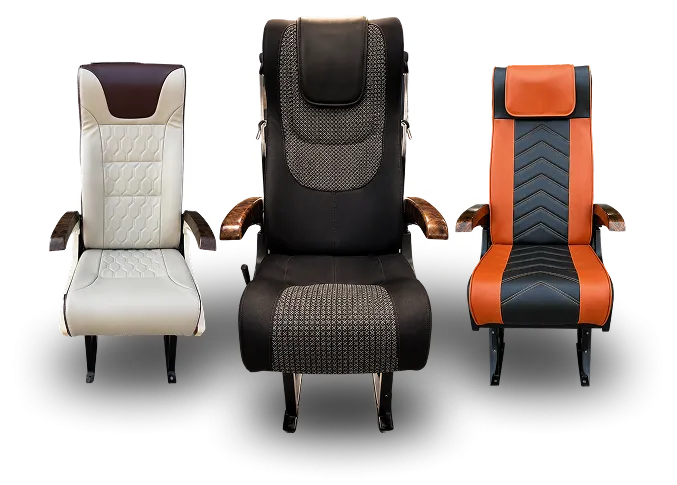
Custom bus seats are seating solutions selected or configured according to a bus’s layout, passenger capacity, comfort requirements and intended use.
You can customise options such as seat layout, upholstery, cushioning, reclining mechanism, armrests, footrests and seatbelts, depending on the seat model.
Reclining bus seats are generally suitable for long-distance travel because they provide adjustable back support and can improve passenger comfort.
A 2×2 layout provides higher seating capacity, while a 2×1 layout offers more personal space and is commonly used for premium and luxury coaches.
Maharaja bus seats and premium reclining seats are suitable options for luxury coaches where wider seating, personal space and enhanced comfort are priorities.
Consider the bus type, available space, seating capacity, route length, passenger comfort, layout, materials and required features before selecting a seat.
