
How Comfortable Bus Seats Improve Passenger Experience

 Aug 15, 2026 | 17 min read
Aug 15, 2026 | 17 min read
Aug 15, 2026 | 17 min read

Comfortable bus seats play an important role in shaping the overall passenger experience, especially on long-distance and intercity journeys. A well-designed bus seat provides the right balance of cushioning, back support, seat width, legroom and reclining flexibility to help passengers remain comfortable throughout the journey. Beyond comfort, the right seating design can also influence how passengers perceive the quality and service of a bus.
From fixed high-back seats to reclining and wider 2×1 seating, different bus seat designs suit different routes, passenger needs and vehicle layouts. Understanding these factors can help bus operators and manufacturers choose seating that delivers better passenger comfort without compromising space, capacity or practicality.
Passengers are not seated in a completely stable environment. Turns, acceleration, road joints and deceleration can affect comfort by transmitting movement and vibration through the bus.
While a seat cannot eliminate all vibration, comfortable bus seats with supportive cushioning, well-designed backrests and suitable dimensions can help reduce its impact.
Research on bus passenger satisfaction also identifies seating arrangements as an important factor in the overall passenger experience, alongside ride quality and ventilation. Therefore, passenger comfort should be considered an important part of the overall service experience.
The cushion can be comfortable for a brief examination but act differently after some hours. The consumer should not rely solely on initial comfort.
An ideal cushion must provide sufficient support without being too hard or letting the passenger sink in the seat. Another important factor is width. A wider seating area ensures that the passenger can change positions without disrupting the passenger next to him or her.
When comparing comfortable bus seats, consider:
Duration of the trip will determine the best cushion. A short route for the bus crew and a night-long intercity run are not going to have the same requirements from the cushion.
The backrest needs to be designed in such a way that the passenger is comfortable without having to bend their shoulders or back.
A fixed high-back seat is well suited to school, staff and short-distance routes, where simple, organised seating is often preferred. For longer journeys, reclining bus seats allow passengers to adjust their seating position and relax more comfortably throughout the journey. The recline mechanism should also be considered alongside seat pitch to ensure sufficient space for passengers.
The movement needs to be adjusted according to the seat pitch.
Here is a simple comparison between Fixed and Reclining seats:
A reclining format is not automatically more comfortable. It becomes useful when the route gives passengers enough time and space to benefit from it.

Passengers feel space limitations very quickly. Their knees might come into contact with the seat in front of them, the armrests may feel cramped, or the aisle may become hard to use.
Therefore, seat width and pitch need to be considered simultaneously. Raising one dimension without considering the overall cabin setup could decrease passenger numbers or disrupt movement.
This requires taking into consideration:
Professional bus seat manufacturers need to take into account both seat and vehicle layout. An image of the product does not indicate whether a layout will be practical in a particular coach.
The passengers usually don’t sit in one position throughout the entire trip. The backrest enables them to recline and change their position, while the footrest will help them to avoid any unsteadiness of their legs.
Armrests represent an additional point of support. Passengers will find it easier to relax, depending on the armrest’s width, height, and finish. Headrests will also be important for passengers who prefer to take a nap or relax.
However, these elements should not be difficult to control. Even if the mechanism looks very sophisticated in the catalogue, it won’t be very useful for the passengers.
For the intercity applications, SF Seats provides a 2×2 40 inches layout, which consists of a 19-inch seating surface, contour headrest, pushback recline, and movable footrest.
Different routes create different definitions of comfort.
The strongest choice is not the seat with the most features. It is the one whose features suit the route.
For executive bus operators and long-distance travel services, there may be a need for wider seats for the sake of providing extra personal space.
Maharaja Bus Seats by SF Seats is an example of a seat that can provide extra space and comfort. This seat features a 2×1 arrangement with a 20.5-inch seating area, push-back recline, 75 mm PU armrests, and fixed or movable foot support. This seat is best used for coaches where passenger comfort is prioritised above all else.

Not all passenger compartments require conventional rows of seats. Custom coaches could have a rear lounge, hospitality compartment, or private seating area.
A sofa bus seat could accommodate such an interior layout by being more spacious and sharing the seats. The seat contains a center console with cup holders, high-density PU foam, and an upholstered finish.
Such a seat format should be chosen when its interior function is clearly defined. It shouldn’t substitute for the conventional seats where capacity and individual access are still important.
Use this checklist before approving a seat for production.
A physical review should include more than a quick sit-down. Check the seat in a realistic posture and consider how it will feel after the journey has continued for some time.
The seat type must be in accordance with the nature of the journey and also the size of the cabin space available. Understanding the different types of bus seats can help operators select the most suitable option for their specific requirements. For example, a fixed type seat is well suited to short trips, whereas the reclining type is better suited for journeys where passengers sit for prolonged periods. The 2×1 seating type provides greater personal space, although at the expense of less seating capacity.
When selecting a seating type, consider the following factors:
The SF Seats product range can help you compare formats before discussing dimensions, upholstery, and fitment requirements.
The SF Seats seating types have all been included within the SF Seats range, which simplifies the selection process prior to considering the actual sizing and fitment.
Choosing the right Seat Manufacturing Company is essential for achieving the right balance of comfort, durability, safety, and value. From seat design and cushioning to materials, ergonomics, and manufacturing quality, every factor can influence passenger comfort and long-term performance. SF Bus Seats offers seating solutions designed to meet the needs of different vehicles, passenger profiles, and operating conditions. By partnering with a reliable Seat Manufacturing Company like SF Bus Seats, businesses can invest in durable, comfortable, and application-specific seats built for lasting performance.
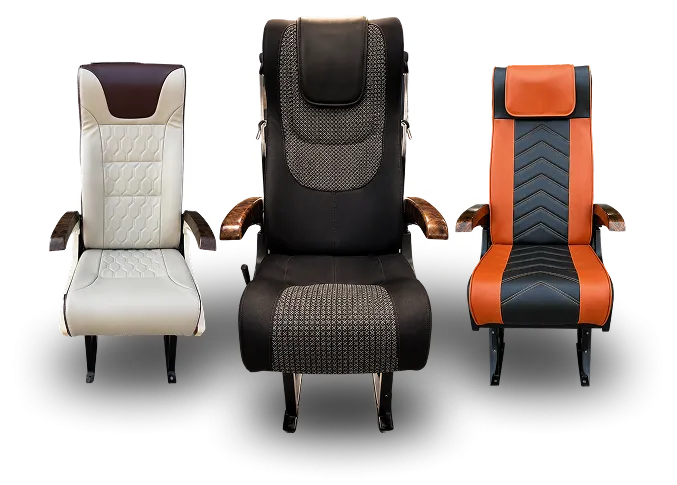
A comfortable bus seat typically combines adequate cushioning, ergonomic back support, proper seat width, sufficient legroom, and an appropriate recline angle to reduce pressure and discomfort during travel.
Comfortable seating helps passengers maintain better posture, reduces body fatigue, and makes long journeys more relaxing, which contributes to a better overall travel experience.
Ergonomic bus seats with supportive cushioning, lumbar support, adjustable recline, headrests, and adequate legroom are generally better suited for long-distance journeys.
A bus seat should have enough cushioning to provide pressure relief without being excessively soft. The ideal cushioning depends on the seat design, journey duration, and intended passenger use.
Seat recline allows passengers to adjust their sitting position and provides greater back comfort, particularly during long journeys. It should also be designed with sufficient clearance between seat rows.
Bus seat design affects posture, pressure distribution, legroom, back support, and personal space. An ergonomic design can reduce discomfort and help passengers remain comfortable throughout the journey.
