
Which Bus Seat Layout Is Best for Passenger Comfort?

 Oct 1, 2026 | 22 min read
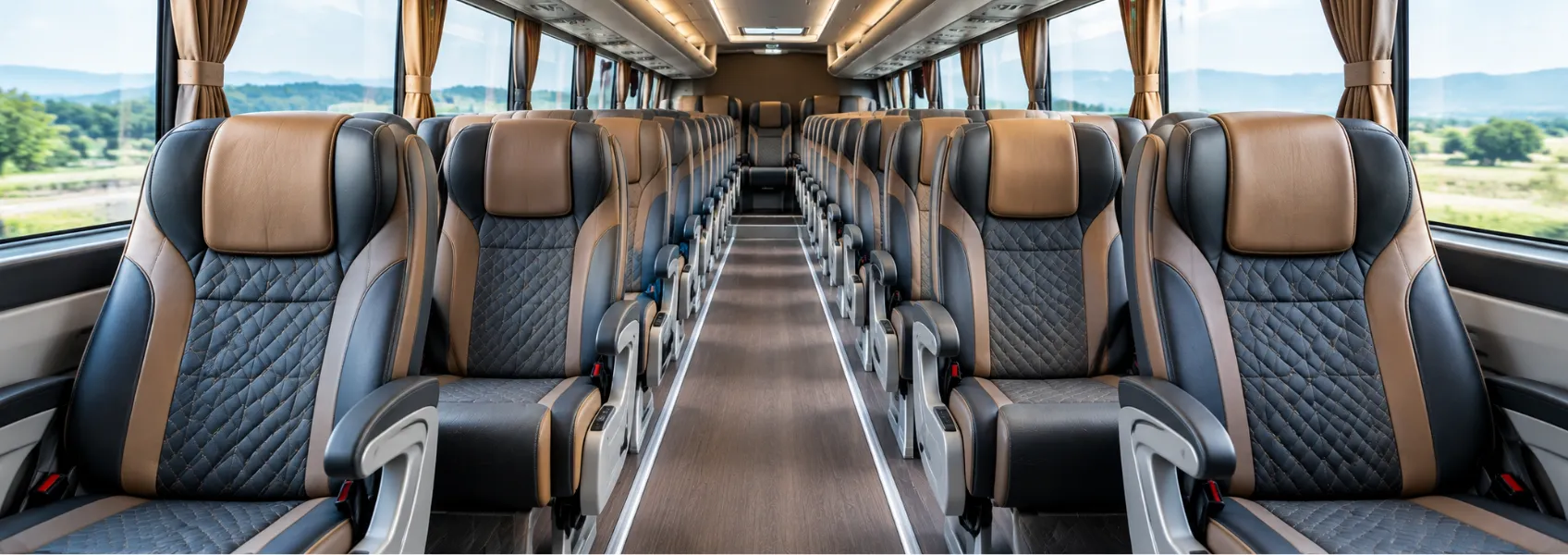
The bus seat layout plays an important role in determining passenger comfort, available legroom, personal space, and ease of movement. A well-planned bus seating arrangement can make short and long journeys more comfortable, while poor spacing or an unsuitable configuration can make passengers feel cramped and uncomfortable.
Different bus layouts are designed for different travel requirements. 2×2 bus seats are commonly used when passenger capacity is a priority, while 2×1 layouts provide more personal space and privacy. Sleeper bus seats are better suited to overnight and long-distance journeys where passengers need greater comfort and reclining space.
So, which bus seat layout is best for passenger comfort? The answer depends on the journey type, passenger expectations, seat spacing, and overall seat design. This guide compares the most common bus seating arrangements and explains how factors such as seat pitch, ergonomics, aisle access, and personal space influence the passenger experience.
‘Bus layout’ refers to the arrangement of seats within the bus, which dictates the utilization of space by the passengers. It also affects the available amount of seating space, leg space, aisle space, and entering/exiting space provided to passengers.
Studies carried out concerning bus interior design show that the space between seats, which is also referred to as seat pitch, can highly influence the comfort level of the passengers. In a new pilot study, it was shown that seat pitch contributed to increased comfort, legroom, and ease of movement.
An appropriate layout must ensure:
Understanding the most popular types of arrangements will come in handy before choosing the best one.
| Seating Layout | Typical Arrangement | Best Suited For |
|---|---|---|
| 2×2 | Two seats on each side of the aisle | City and intercity travel |
| 2×1 | Two seats on one side and one on the other | Premium and luxury coaches |
| 1×1 | Individual seats with maximum personal space | Luxury travel |
| Sleeper | Flat or semi-flat berths | Overnight journeys |
| Side-facing | Seats positioned along the side of the bus | Some urban and special-purpose buses |
Choosing the right layout also starts with understanding the different types of bus seats available for different vehicle applications. From fixed highback and reclining seats to folding and premium seating options, each type offers a different balance of comfort, capacity, and functionality. Explore our guide to different types of bus seats to compare the available seating options.

2 x 2 bus seats are some of the most common seating configurations seen in coaches and intercity buses. This configuration consists of two seats on each side of the center aisle.
Its greatest strength is the efficiency it brings with regard to the number of passengers that can fit into the vehicle while at the same time ensuring that the vehicle size is not excessively large.
This is one of the most suitable configurations for shorter journeys.
Nevertheless, comfort greatly depends on the spacing between rows. With two seats on each side, comfort does not necessarily have to be compromised.
Hence, the comfort level of the actual seat is equally important as the configuration of the bus seat numbers.
Sleeper bus seats can offer a more comfortable experience when traveling overnight or on journeys that take many hours.
Rather than sitting upright in a regular seating position the entire time, sleeper seating offers a passenger berth or reclining space so as to be able to sit comfortably for a longer duration of time.
A study conducted in 2026 on the preferences for intercity buses in India studied 2,130 valid survey respondents. It showed that a preference was made for sleeper buses when the journey took more than six hours or covered more than 300 km, especially by older people and women.
This makes sleeper configurations particularly useful for:
Nonetheless, sleeper seat buses usually have a capacity for a smaller number of people compared to standard seating buses. They may even take up more room inside the vehicle.
Therefore, despite being ideal for long journeys, sleeper bus seats may not always be the best option on every route.
The seating arrangement in a bus constitutes one component that contributes to passenger comfort. There are other factors to consider in the design of each individual seat on the bus.
Ergonomic research on bus seats has been carried out on components like headrest, upper back support, lumbar support, hip support, and thigh support.
A comfortable seat should include:
| Comfort Factor | Why It Matters |
|---|---|
| Seat Width | Provides adequate personal space |
| Seat Pitch | Gives passengers more legroom |
| Backrest Support | Helps maintain a comfortable posture |
| Cushioning | Reduces pressure during longer journeys |
| Headrest | Supports the head and neck |
| Recline | Allows passengers to adjust their position |
| Armrests | Provides additional support |
| Aisle Space | Makes movement easier |
The seating should match the travel too. A hard and straight sitting arrangement may be fine when traveling from one city to another, but it may become uncomfortable on a six-hour journey.
Beyond the seating configuration, the design of the individual seat also has a major effect on passenger comfort. Factors such as cushioning, back support, seat width, legroom, and reclining flexibility can influence the overall travel experience. Read our guide on how comfortable bus seats improve passenger experience to understand these factors in greater detail.

The term “seat pitch” means the distance between the seat and the one in front of it. This is one of the most significant criteria to take into account when estimating the design of the bus seating area. For a deeper understanding of seat spacing, measurement, and how it affects passenger comfort, see our guide to bus seat pitch and the right seat spacing.
If the seat pitch is too short, passengers might have problems sitting comfortably and getting in and out of the seats.
In one of the most recent studies on bus mock-ups, several seat pitches, 20, 30, and 45 cm, were investigated. It was found that passenger comfort and ease of movement were much higher with more space.
This illustrates an important point: the number of seats in a bus does not tell us anything about its comfort.
The optimal seating arrangement takes into account how passengers will use the available space.
What seems like a straightforward bus seat number system could actually mean something when it comes to the ease of finding and accessing the passenger seats.
The system that works well should include:
A well-thought-out bus seat number system is especially vital for long-distance buses when travelers have to quickly access their seats after boarding with luggage.
Operators can also utilize the bus seat number system to assist travelers in choosing their desired seat through an online reservation service.
2×1 means that one side will have two seating positions, while the other will have one. The capacity is lower when compared to the usual 2×2 arrangement, but at least there is some extra space for the passengers.
| Feature | 2×2 Layout | 2×1 Layout |
|---|---|---|
| Passenger Capacity | Higher | Lower |
| Personal Space | Moderate | Better |
| Privacy | Limited | Better |
| Aisle Access | Good | Very good |
| Premium Feel | Standard | Higher |
| Best Use | Regular services | Premium coaches |
In terms of capacity-to-comfort ratio, the 2×2 layout is an ideal choice for operators. The 2×1 layout would be preferable for those passengers whose main concern is privacy and personal space.
It is not mandatory that all bus seating be forward-facing.
Seating that faces sideways may provide more spaciousness in some sections of a bus and help with movement. In the experimental study conducted recently, as discussed above, the rating for comfort, legroom, and ease of movement was high when the sideways-facing bench seating was used in the study.
This does not necessarily imply that the sideways-facing seating is always the best choice for all types of buses. There are passenger preferences and other considerations that have to be taken into account.
There isn’t any one-size-fits-all answer. The perfect seating arrangement for buses depends upon passenger expectations.
| Journey Type | Recommended Layout | Main Reason |
|---|---|---|
| Short City Journey | 2×2 | Efficient capacity |
| Medium-Distance Route | 2×2 with good pitch | Balance of comfort and capacity |
| Premium Coach | 2×1 | More personal space |
| Overnight Journey | Sleeper | Rest and privacy |
| Luxury Intercity Service | 2×1 or sleeper | Higher comfort |
| High-Capacity Service | 2×2 | Efficient passenger movement |
For shorter flights, customers may focus on quick boarding, comfortable movement, and seating facilities. On longer trips, they place emphasis on legroom, reclining, privacy, and sleeping conditions.
Ultimately, the best bus seat layout is not necessarily the one that provides the most seats. It is the one that creates the right balance between capacity, comfort, accessibility, and the purpose of the journey.
For normal commuting, 2×2 bus seats still form an acceptable solution, due to the good number of seats they give while keeping things simple in the interior of the bus. For longer distances and night-time trips, sleeper bus seats would be a more comfortable choice.
The design of bus seats itself is also important to consider. Scientific research has found that seat profile, backrests, and other ergonomic aspects affect comfort. The effect of vibration and the angle of seat backrests on the human body during bus rides has also been studied.
As such, when choosing a seating configuration, one must consider factors apart from just seat numbers. These include leg room, padding, comfort, and spacing, among others.
Choosing the right bus seat layout depends on the type of journey, available cabin space, passenger capacity, and the level of comfort expected. A 2×2 layout is practical for regular and high-capacity services, while 2×1 seating offers more personal space and a premium travel experience. Sleeper layouts are better suited for overnight and long-distance journeys.
A comfortable bus interior also depends on factors such as seat pitch, seat width, cushioning, backrest support, recline, and aisle access. The bus seat number layout should be clear and easy to follow so passengers can find their seats and move through the vehicle comfortably.
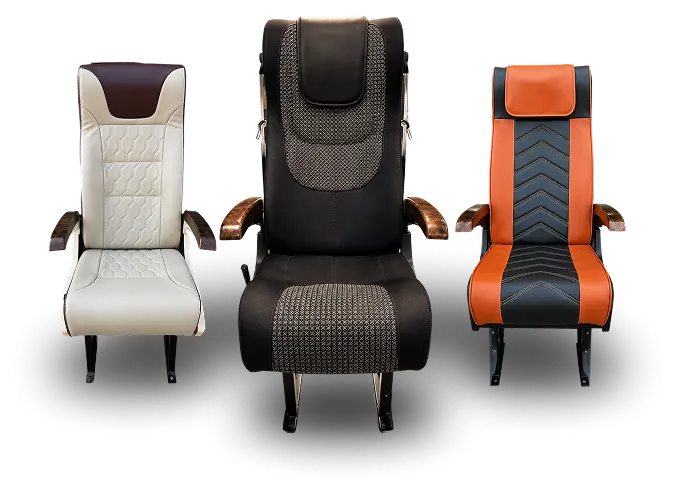
As an experienced Seat Manufacturing Company, SF Seats provides a range of bus seating solutions designed for different vehicle layouts and passenger requirements. From reclining and Maharaja seats to highback, folding, and school bus seats, the right seating configuration can help operators balance comfort, functionality, passenger capacity, and overall travel experience.
A 2×1 bus seat layout is generally more comfortable when personal space and privacy are the priority. It provides more room per passenger than a 2×2 layout. For overnight journeys, sleeper seats can offer greater comfort by allowing passengers to recline or rest.
Yes, a 2×2 bus seat layout can be comfortable for long-distance travel when it provides adequate seat pitch, cushioning, backrest support, and legroom. However, 2×1 or sleeper layouts may provide greater comfort on longer journeys.
Sleeper bus seats are generally the best choice for overnight travel because they provide more reclining or lying space for passengers. They are particularly suitable for journeys where passengers need to rest or sleep during the trip
A 2×2 layout has two seats on each side of the aisle and prioritizes passenger capacity. A 2×1 layout has two seats on one side and one on the other, providing more personal space, better aisle access, and a more premium travel experience.
Bus seat pitch affects legroom, sitting comfort, and ease of movement. A shorter pitch can make passengers feel cramped, while adequate spacing gives passengers more room to sit, move, and enter or exit their seats comfortably.
A comfortable bus seat layout should provide adequate seat pitch, seat width, cushioning, backrest support, headrests, reclining options, armrests, aisle access, and personal space. The layout should also match the type and duration of the journey.
