

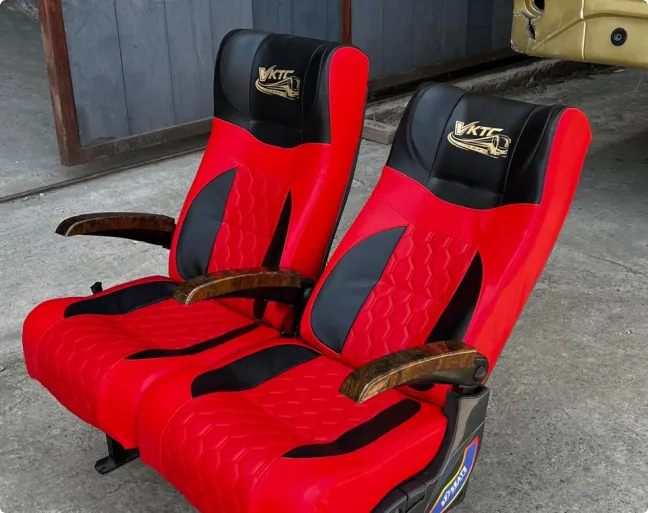

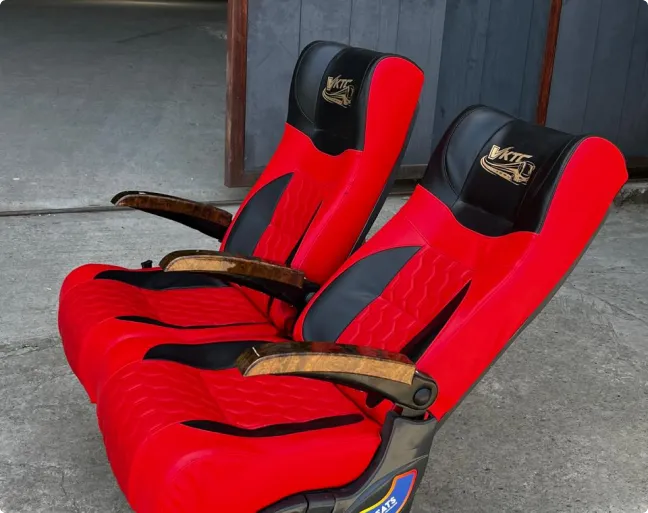

Built for intercity coaches running frequent services, this 2×2 format balances cabin efficiency with passenger comfort, supporting organised layouts and steady performance over time.

19 Inch

PU Foam

PU/Wooden (50 mm)

Built for 2×2 coach configurations, this 40” format supports balanced cabin density without compromising passenger experience. The seating profile maintains a supportive posture across mid-to-long routes while allowing efficient layout planning. Integrated storage elements and configurable armrest finishes help operators maintain consistent interior standards across fleet expansions.

 Contoured Headrest
 Dual-Finish Armrests
Defined specifications and controlled materials ensure every seat performs and holds its standard from production to delivery. (Customised seats available on request)
Start with your project details, and we’ll help narrow the seating direction with greater clarity around layout, timing, and fitment.


Enhance this configuration with practical additions aligned to the route category and passenger usage.

Seat Belts

Footrest System

Bottle Holder

Magazine Holder
Stay informed on the ideas, trends, and practices behind modern bus seating.
The 40” proportion allows builders to maintain balanced aisle space while preserving seating clarity. It works well in coaches where layout precision matters, helping ensure consistent alignment across rows without compressing the cabin visually or affecting structured interior presentation.
Defined dimensions and stable material selection reduce variation across production cycles. This helps bodybuilders maintain uniform installation positioning and simplifies interior planning when multiple coaches are being manufactured under the same configuration requirements.
The 19-inch profile supports individual seat identity within a 2×2 layout. It provides sufficient personal space while maintaining cabin efficiency, making it suitable for operators who want balanced comfort perception without increasing overall coach footprint.
Yes. With selectable upholstery finishes and armrest materials, the seat adapts to varied cabin themes. Whether the coach follows a wood-accent aesthetic or a minimal industrial interior, the configuration supports visual alignment without structural modification.
Powder-coated framing and controlled foam density help maintain finish and seating feel across usage cycles. This supports fleets aiming for uniform cabin presentation, especially when vehicles operate on similar service schedules over extended periods.
